During the 3rd century BC, Megasthanes a Greek historian visited
Madurai. Later on many people came from western parts like Rome, Greece etc. and
established trade with the Pandya kings. By 10th century AD Madurai was
captured by Cholas and ruled it till the beginning of the 13th century. Then Pandyas
regained it in 1223 AD. For a short period it was also under the rule of
Tughlak. Then it fell to the Vijayanagar dynasty and ruled by their Governors
called Nayaks. But in 1530 AD, the Nayaks became independent and took control
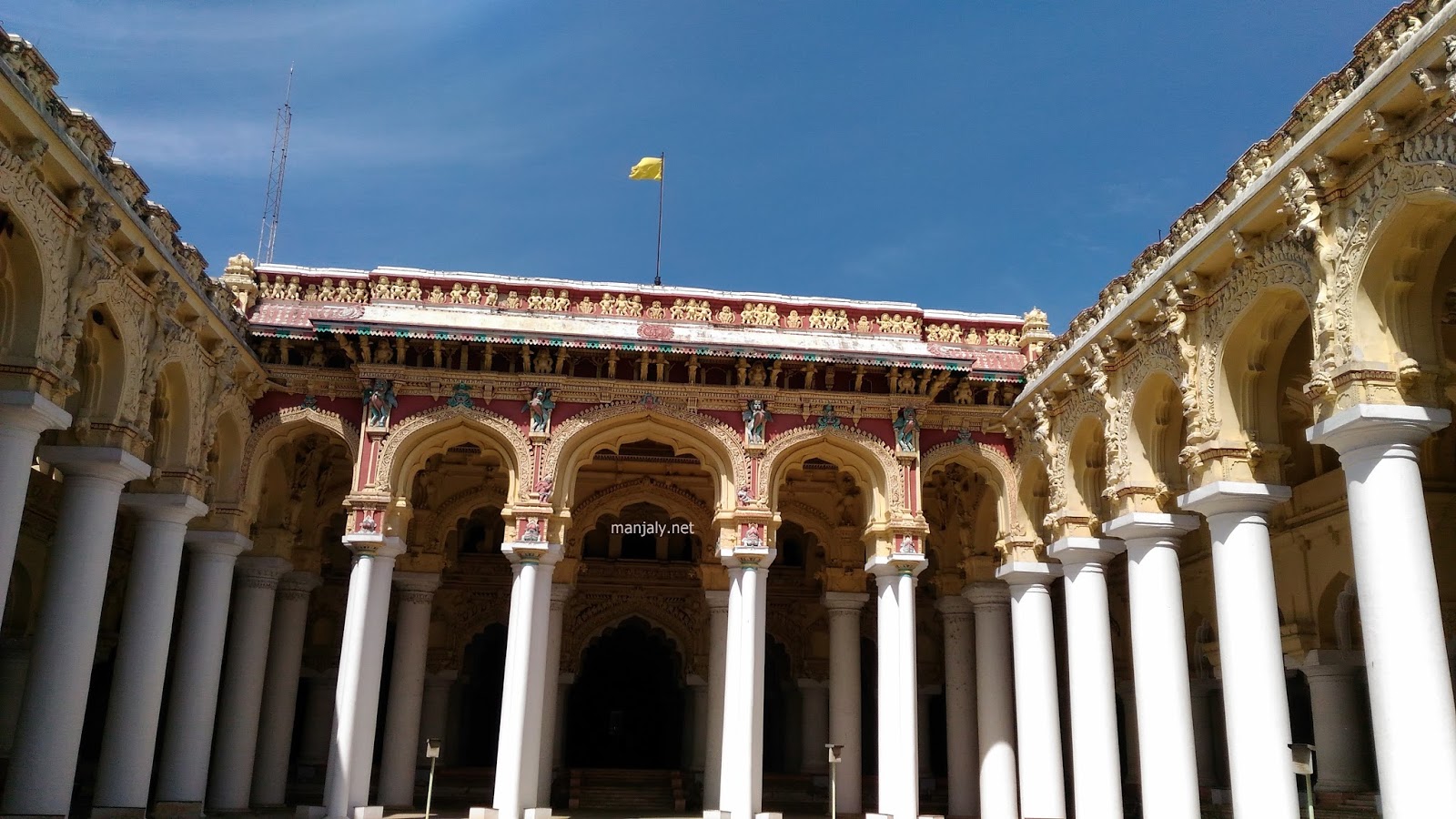
over the area. During the reign of Thirumalai Nayak (1623-1659) the Raja Gopuram
of the Meenakshi Amman Temple was made to the present state, The Pudu Mandapam and The Thirumalai Nayakar's
Palace were also constructed during this period. Gradually, it went into the hands of British till
India became Independent.
Madurai city is well connected by Air, Rail and Road. There are also many other tourist places near to Madurai such as Kodai Canal, Kanyakumari etc. in Tamil Nadu and Thekkadi, Munnar etc.in Kerala. Conducted tours are also available to these places from Madurai.
The twin Temple comples of Madurai City - Sri Meenakshi and
Sundareshwar is synonymous with the city itself. It is not only one of the
largest temples of India, but also one of the oldest too. It grew to the
present form with an area of about 65000 Sq. mt. with the generous
contributions of each dynasty which ruled the city of Madurai. The temple is
believed to be first came into existence about 2000 years ago. However, it was
substantially expanded during the ruling period of Thirumalai Nayak (1623-55
AD).
Though the temple is a twin complex of Lord Siva in his
incarnation as Sundareshwar and his wife Meenakshi (Parvati), meaning fish-eyed,
is the main deity unlike in many other temples where Lord Siva used to be the
presiding or the main deity. There are four huge gateways enclosing the twin
temples. For the Hindu pilgrims (non Hindus are not allowed inside the sanctum
sanctorum) it is a pious area but for the tourists it is a marvellous structure
with its many paintings and sculptures adopted from the Hindu religion with
unimaginable accuracy and perfectness on the hard rock pieces.
A striking feature of the temple is the astonishing structure
known as the “Ayiramkaal Mandapam” or the Hall of Thousand Pillars and each
pillar features high, decorative, bold sculptures that look life like. If you
look from any angle, these pillars appear to be in a straight line, reminding
the perfect architectural technology of those days and making it a masterpiece
in itself. In the outermost corridors are situated the musical
pillars carved out of stones. When it is tapped, each pillar produces different
musical note.
There is also a pond in the middle of the complex making it
more beautiful. Outer part of the temple is used as market place where tourists
as well as pilgrims can buy various articles of their choice.
Madurai city is well connected by Air, Rail and Road. There
are also many other tourist places near to Madurai such as Kodai Canal,
Kanyakumari etc. in Tamil Nadu and Thekkadi, Munnar etc.in Kerala. Conducted
tours are also available to these places from Madurai.
ALSO VISIT MY FOLLOWING BLOGS/WEBSITE:
indiantravelexperience.manjaly.net
centralemployeesnews.manjaly.net
cagreport.manjaly.net
publiccause.manjaly.net
https://www.facebook.com/afraudintheindianconstitution?ref=aymt_homepage_panel
www.manjaly.net